Trap. Neuter. Return. Repeat.
TNR Volunteering Made Easy
Trap. Neuter. Return. Repeat. TNR Volunteering Made Easy
[/searchwp_no_index]
Ever wondered what you could do to help the community cats you may have noticed around your neighborhood? Volunteering to help with Trap Neuter Return (TNR) is a great place to start, because it really is the most effective and compassionate way to reduce overpopulation and help our feline neighbors live longer, healthier lives.
Every day, caring TNR volunteers are changing lives and making a positive impact by humanely trapping free-roaming cats, taking them to get spayed or neutered and vaccinated, and then returning them to their outdoor homes.
And the best part is that you don’t have to be an expert or spend a lot of time to make a real difference. In fact, all it takes is a little planning ahead to make being a TNR volunteer fit easily into your life.
10 Steps for a Seamless TNR Experience
Before Trapping
Book your appointment. Schedule a low-cost spay/neuter surgery at the veterinary clinic on a date that’s convenient for you.
TRAPPING TIP: Ideally, the surgery should be scheduled at least a week out from when you call, to give you time to build the cat’s trust.
Build trust. Begin feeding a community cat around the same time every day, and always in the same place.
Arrange to borrow a trap. Do this about a week before surgery so you’ll have enough time to familiarize the cat with the trap.
TRAPPING TIP: You can often borrow traps from a shelter or a TNR network in your community.
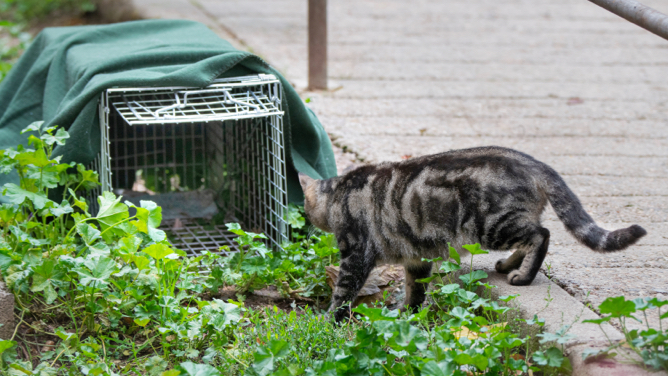
Feed the cat in the trap. Place the trap in your usual feeding area and remove the door or zip-tie it open, and feed the cat in the open trap for a few days.
TRAPPING TIP: Each day, place the food increasingly deeper into the trap.
Don’t feed for 24 hours before your target trap time, since a hungry cat is more likely to go into a trap.
Trap Time!
Set the trap. Use wet cat food or canned fish such as mackerel, tuna or sardines for the most enticing bait.
TRAPPING TIP: Successful trapping is usually done in the evening or early morning, when cats are most active.
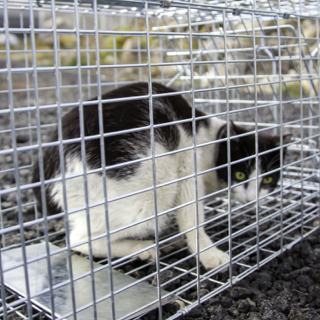
Keep ’em calm. Once the cat is caught, cover the trap with a sheet or towel to reduce their stress.
Take the cat to a clinic for spay/neuter surgery and vaccinations, followed by the left ear tip that will identify them as sterilized.
TRAPPING TIP: Lay a trash bag down in your vehicle to prevent any messes.
After Surgery
Pick up the cat and let them recover overnight in the trap, since they’ll need time for the anesthesia to wear off.
TRAPPING TIP: A cat can’t regulate their body temperature immediately after surgery — so if it’s cold outside, you’ll want to keep the trap inside your home that first night.
Return the cat to their outdoor home the morning after surgery. (And don’t forget to leave out some breakfast.)
That’s all it takes to be part of a powerful movement that’s saving lives and creating a better world for cats and people alike.
Remember: you can start small by helping just one cat at a time. And you certainly don’t have to do this alone. Most shelters have TNR networks who provide traps, training, resources and support — and you can also join your local TNR Facebook group. It’s a great way to foster a sense of community with like-minded neighbors, rescue groups and vets who all care about animal welfare as much as you do.